Hi,welcome To Login SEHOT CO., LIMITED!
- Login Register Collection
- |
- |


Home Page> Industry Information> Semiconductor Foundries Are Significantly Reducing Prices For Mature Process Wafer Fabrication
Form: 2023/11/17 Browse:656 Keywords: Semiconductor foundries
Recently, according to reports from Taiwanese media, semiconductor foundries such as United Microelectronics Corporation (UMC), Vanguard International Semiconductor (VIS), and Powerchip Semiconductor Manufacturing Corporation (PSMC) have significantly slashed their quotes for the first quarter of 2024 to salvage capacity utilization rates.

The reports indicate that the magnitude of this price reduction is in the double-digit percentage range, with dedicated clients experiencing even higher reductions ranging from 15% to 20%. This marks the most significant price reduction since the onset of the pandemic. Insiders in the industry suggest that, ostensibly, only TSMC has maintained relatively firm prices, while almost every other manufacturer has been affected by these substantial price cuts.
IC design companies have privately disclosed that semiconductor foundries have informed them of poor business conditions in mature processes, with very low-capacity utilization rates. To ensure market share and maintain a certain scale, the foundries have been compelled to implement substantial price cuts.
Industry insiders point out that despite recent signs of recovery in the PC and smartphone markets, customers are still cautious due to external factors such as inflation. Especially considering that much of the past year has been focused on inventory clearance, IC design companies are afraid of getting stuck in another inventory glut. Consequently, their current wafer production strategies remain conservative. Currently, the recovery in order placements is only about 30% to 40% of pre-pandemic levels. This has forced semiconductor foundries to intensify their efforts to reduce prices, aiming to prevent the loss of orders to competitors willing to accept lower prices, which would further deteriorate capacity utilization rates.
It is understood that consumer demand for wafer production is low, and manufacturers specializing in 8-inch wafer foundry services for mature processes are the most affected. This is primarily due to a significant volume of redundant orders from Integrated Device Manufacturers (IDM) and IC design companies in the past. This resulted in a surplus of inventory, particularly for components like power management ICs, driver ICs, and MCUs. Additionally, some products have shifted to 12-inch wafers. As a result, the capacity utilization rates for 8-inch wafer foundries have remained at low levels in the recent period.
Industry experts point out that TSMC has the support of advanced processes, enabling it to bundle them with mature processes for sale. Additionally, TSMC's pricing for mature process foundry services has not experienced a drastic increase compared to other industry players. As a result, many customers still find TSMC's strategy acceptable, giving TSMC a relatively confident position in terms of pricing for mature processes.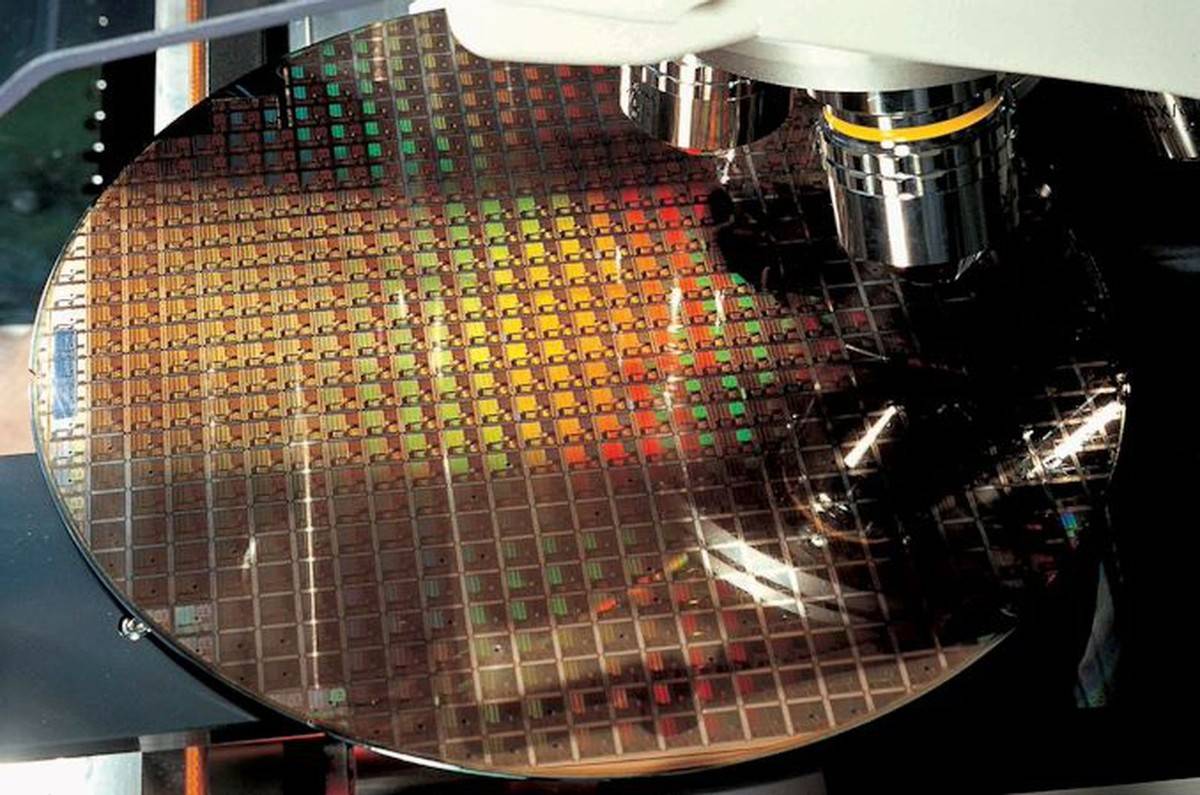
Regarding UMC (United Microelectronics Corporation), the company anticipates that its capacity utilization rate for the current quarter will decrease from the previous quarter's 67% to a range of 60% to 63%, marking a single-season low in recent years. Due to the ongoing adjustments in capacity utilization, the gross profit margin is expected to decline from last quarter's 35.9% to a range of 31% to 33%.
In response to questions about pricing, UMC stated that there would indeed be a significant reduction for 8-inch wafers, but no adjustments are planned for 12-inch wafers. Supply chain sources revealed that, to strengthen customer order momentum, UMC has reportedly offered a 5% price concession to major customers for the current quarter. Considering the expected subdued demand in the first quarter of the following year, and to attract customers and increase wafer production, UMC is reportedly considering expanding the price reduction to a double-digit percentage for the next quarter.
As for VIS (Vanguard International Semiconductor), supply chain sources reveal that a price reduction of up to 5% is expected in the second half of the year. Larger customers with substantial wafer production volumes may even have the potential to negotiate a 10% reduction. Similarly, PSMC (Powerchip Semiconductor Manufacturing Corporation) has been affected by the conservative approach of its customers, resulting in a loss in the third quarter, with a capacity utilization rate hovering around 60%.
It is reported that PSMC is similarly impacted by the conservative wafer production approach of its customers. In the third quarter, PSMC incurred losses, and its capacity utilization rate remained around 60%. The company is also expected to implement price reduction measures to boost capacity utilization.