Hi,welcome To Login SEHOT CO., LIMITED!
- Login Register Collection
- |
- |


Home Page> Industry Information> Power Ics: Trends In Industrial Applications
Form: 2023/9/19 Browse:1640 Keywords: Power ICs
Top industrial power IC trends include higher efficiency, integration, adoption of WBG semiconductors and smart power management.
Power ICs have become vital components that facilitate the smooth operation of industrial processes and factory automation systems, as well as support the development of smart factories.
These electronic devices play a crucial role in effectively overseeing the distribution, conversion and regulation of power, leading to improved efficiency, reliability and cost-effectiveness in various industrial applications.
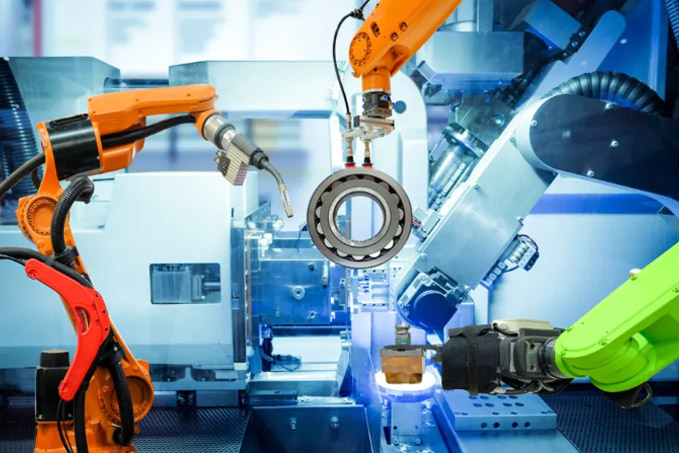
(Source: Shutterstock)
Accurate and reliable power management is essential in industrial environments to guarantee constant operation and to avoid costly breakdowns.
Power ICs, encompassing devices like multi-channel power management ICs (PMICs), DC/DC switching regulators and linear regulators, are first in charge of providing
the required power-conversion capabilities for automation systems in factories and other industrial settings.
At the heart of any industrial process is the need to power distinct components with varying voltage levels.
Power ICs convert voltage levels efficiently, allowing for seamless communication between components operating on different power supplies.
Voltage regulation is another feature that power ICs must provide. In industrial and factory automation, the stability of voltage levels is essential.
Voltage fluctuations can disrupt operations and cause damage to sensitive equipment. Power ICs provide robust voltage regulation, ensuring a constant supply to vital components and preventing disruptions
that could result in outages.Electronic components can undergo severe stress in circumstances that are typical of industrial settings.
Protection mechanisms, such as those for overvoltage protection, overcurrent protection and thermal shutdown,
are frequently integrated into power ICs for the purpose of ensuring the security and longevity of linked devices.
Power ICs are crucial in many applications, including smartphones, computers, automotive electronics, industrial controls, and more.
With continuous innovation and technological advancements, the development trends of power ICs are manifested in the following aspects:
1. High integration: In order to reduce system costs, minimize PCB space, and enhance overall system reliability, power ICs are becoming increasingly integrated.
This includes the integration of power switches, controllers, protection circuits, and even directly integrating passive components such as inductors, forming highly integrated power management solutions.
2. Higher efficiency: To meet energy-saving and environmental protection requirements, and reduce heat generation, power ICs continuously improve efficiency. This includes adopting high-performance power devices,
optimizing control strategies, and reducing switching losses. Moreover, digital control technology is increasingly used for precise power management and flexible configuration, further increasing efficiency.
3. Wide input voltage range: With the diversification of application scenarios, power ICs need to adapt to a broader range of input voltages to meet the requirements of different products.
Power ICs are under development with wide input voltage ranges, while maintaining high efficiency and stable performance.
4. Fast charging technology: Intelligent devices require higher performance charging functions, thus power ICs have developed various fast charging technologies, such as QC, AFC, PD, etc., to achieve shorter charging times.
In addition, to meet the needs of wireless charging, power ICs are also developing efficient and low-energy-consumption wireless charging solutions.
5. Intelligentization: Power management systems are moving towards more intelligent directions. For example, in mobile devices, the power IC can automatically adjust the output voltage according to the device's working status to extend battery life.
Similarly, in data centers, power ICs can monitor and dynamically adjust server power allocation in real-time, improving energy utilization.
6. Programmability of power ICs: With the development of digital power technology, power ICs have gained better programmability, allowing them to adapt to different application scenarios and demands.
Programmable power ICs enable users to control and adjust parameters through programming to optimize overall system performance.
7. Safety and reliability: In the development of power ICs, the protection and control against overvoltage, overcurrent, and overtemperature abnormalities are becoming increasingly stringent, ensuring system safety and reliability.
In summary, the development trends of power ICs include high integration, high efficiency, wide input voltage range, intelligentization, programmability, and safety and reliability.